
Why do material choices matter Gangnammould Trash Bin Mould in production environments
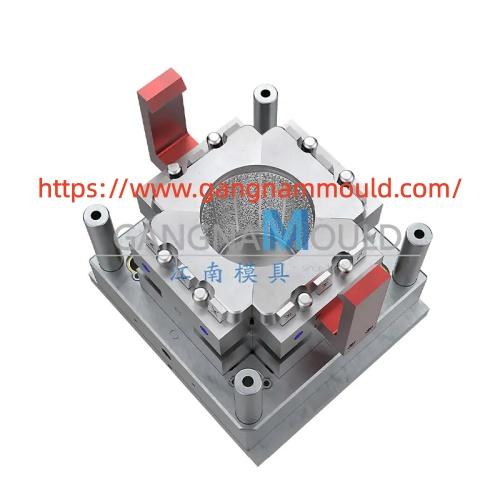
Trash Bin Mould production depends heavily on material selection, and this choice often defines how the final product behaves under real use conditions. In manufacturing environments, the process begins with heating raw material until it becomes fluid enough to fill the cavity. At that moment, everything looks controlled, but the true behavior of the product is shaped during cooling and stabilization.
Inside factories, conditions rarely stay constant. Machines run continuously, heat builds up around forming areas, and airflow shifts slightly as doors open and close throughout the day. These small environmental changes interact with material properties and influence how evenly the structure settles.
Different materials behave differently under pressure. Some cool quickly but may retain internal stress. Others take longer to stabilize but provide more balanced structural formation. Engineers often evaluate these behaviors by observing how finished items respond during stacking, transport, and repeated handling.
In many production floors, surface texture and rigidity become early indicators of how well material choice aligns with process conditions. If cooling is uneven, slight variations may appear in shape or thickness. These differences are not always visible immediately, but they become noticeable after repeated use cycles.
Handling conditions also matter. Products are lifted, stacked, and moved across storage zones where space is often limited. When structural balance is stable, movement feels predictable. When material behavior is inconsistent, minor adjustments are required during transport or packaging stages.
Temperature control during production plays a quiet but important role. Heat distribution inside the mold affects how material flows and settles. If cooling happens too quickly in one area, stress may build internally. Over time, that can influence how the product performs under load.
Design and material work together in shaping final results. Engineers often adjust cavity flow and cooling paths while also selecting materials that respond well under continuous operation. These combined decisions help reduce variation between production cycles.
Teams working with Gangnammould often study these interactions in real manufacturing environments rather than isolated tests. The focus is on how materials behave after long hours of repeated production, where small differences become more visible over time.
In practical applications, stability is not created in a single step. It develops through repeated cycles where heat, pressure, and cooling interact continuously. When material choice aligns with these conditions, the final structure remains more predictable during use.
More technical options and application details can be viewed at https://www.gangnammould.com/product/ where different industrial solutions are presented based on real production requirements.

 Arabic
 French
 Spanish
 Portuguese
 Deutsch
 Turkish
 Dutch
 Italiano
 Russian
 Romaian
 Portuguese (Brazil)
 Greek