
Need Better Protection Against Hidden Vehicle-Borne Security Threats?
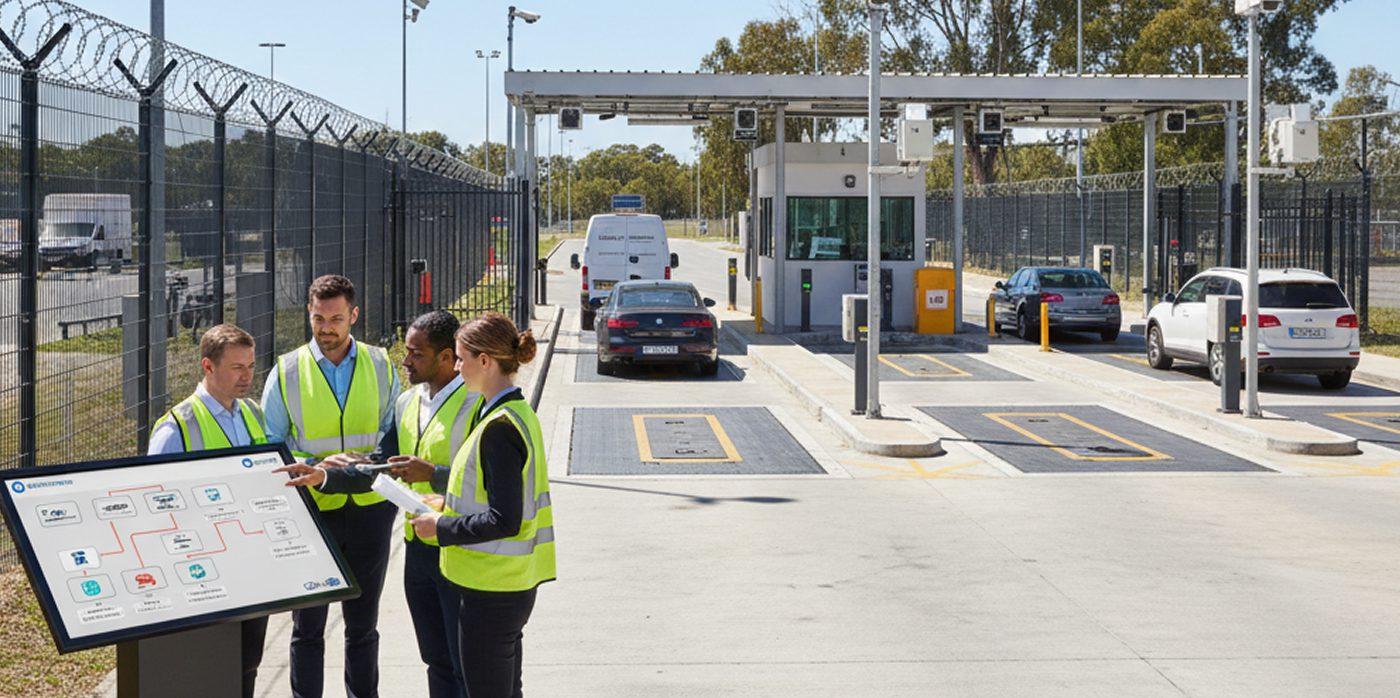
Security threats are constantly evolving, and facilities responsible for protecting people, assets, and critical infrastructure face increasing challenges every day. Airports, government buildings, military installations, industrial facilities, logistics hubs, ports, and energy sites all share one common concern—vehicles entering their premises can potentially carry hidden threats.
While perimeter fencing, surveillance cameras, and access control systems play a major role in facility protection, vehicle entry points remain one of the most vulnerable areas. Many organizations continue to rely on traditional inspection methods that are no longer sufficient for identifying sophisticated threats concealed beneath vehicles.
As traffic volumes increase and security expectations rise, facilities need smarter solutions that can detect risks quickly, accurately, and consistently without creating operational delays.
This is where the integration of License Plate Recognition (LPR) systems and advanced under vehicle inspection technologies is transforming modern security operations.
The Growing Risk of Hidden Vehicle-Borne Threats
Vehicle-borne threats have become a major concern across high-security environments. Unauthorized objects, concealed packages, contraband, and suspicious modifications can often be hidden underneath vehicles where they are difficult to detect using traditional inspection methods.
Security personnel face the difficult task of balancing thorough inspections with efficient traffic flow. In many facilities, hundreds or even thousands of vehicles pass through checkpoints every day. Under such conditions, maintaining inspection accuracy becomes increasingly challenging.
The problem is further complicated by the fact that the underside of a vehicle is one of the least visible areas during a routine security check.
Without specialized technology, critical details can easily go unnoticed.
Why Traditional Vehicle Inspections Fall Short
Many facilities still rely on methods that have changed very little over the years.
Common inspection practices include:
-
Manual vehicle logging
-
Visual inspections
-
Handheld mirrors for undercarriage checks
-
Paper-based reporting
-
Separate monitoring systems
Although these methods may appear cost-effective, they introduce several security and operational weaknesses.
Human Error Can Compromise Security
Manual inspections depend entirely on the attention and experience of security personnel. Fatigue, distractions, weather conditions, and high traffic volumes can all impact inspection quality.
Even highly trained personnel may miss small details during repetitive inspection tasks.
Traffic Congestion Creates Pressure
Busy facilities cannot afford lengthy delays at entry points. When vehicle queues begin to build, inspectors often face pressure to accelerate checks, increasing the likelihood of missed threats.
Limited Visibility Beneath Vehicles
Traditional mirrors provide only a partial view of vehicle undercarriages. Important details can remain hidden due to lighting conditions, vehicle design, or environmental factors.
As threats become more sophisticated, these limitations create unacceptable security risks.
Why Modern Facilities Need Smarter Vehicle Screening
Today's security environments demand greater speed, accuracy, and consistency.
Organizations require solutions capable of:
-
Rapid vehicle identification
-
Automated inspection procedures
-
Continuous monitoring
-
Real-time threat assessment
-
Digital recordkeeping
-
Centralized security management
Meeting these requirements through manual methods alone is becoming nearly impossible.
Modern vehicle screening technologies provide a more effective approach by automating key inspection processes while supporting security personnel with better information and visibility.
How LPR Technology Enhances Access Control
License Plate Recognition technology has become a core component of modern vehicle security strategies.
LPR systems automatically capture and process license plate information as vehicles approach facility entry points. This information can then be compared against authorized access databases, watchlists, and historical records.
Benefits of LPR technology include:
-
Faster vehicle identification
-
Automated access verification
-
Improved visitor management
-
Accurate vehicle tracking
-
Reduced administrative workload
-
Enhanced investigative capabilities
Instead of relying on manual recordkeeping, facilities gain a searchable digital history of vehicle activity.
This improves operational efficiency while supporting stronger security oversight.
The Missing Piece: Under Vehicle Inspection
While LPR systems identify vehicles, they do not reveal what may be hidden underneath them.
This is why advanced under vehicle inspection technologies have become increasingly important for facilities requiring enhanced protection.
Automated scanning systems capture detailed digital images of vehicle undercarriages as vehicles pass through designated inspection zones.
Unlike manual inspections, these systems provide consistent and comprehensive visibility beneath the vehicle.
Security operators can review high-resolution images, compare scans against historical records, and identify unusual objects or modifications more effectively.
Why Integration Creates a Stronger Security Solution
Individually, both LPR and under vehicle inspection technologies provide valuable security benefits.
When integrated, however, they create a much more powerful vehicle screening solution.
Integrated systems allow facilities to:
-
Identify vehicles automatically
-
Capture undercarriage images simultaneously
-
Link inspection records with vehicle identities
-
Monitor vehicle history
-
Generate automated alerts
-
Improve threat assessment capabilities
This unified approach provides security personnel with a more complete picture of every vehicle entering the facility.
As a result, inspection processes become faster, more accurate, and easier to manage.
Detecting Hidden Threats Before They Become Incidents
Security incidents often occur when threats remain undetected during entry screening.
Potential risks may include:
-
Suspicious attachments
-
Concealed packages
-
Unauthorized modifications
-
Contraband transportation
-
Tampering attempts
An advanced under vehicle scanning system helps security teams identify these risks more effectively by providing detailed undercarriage imaging and automated inspection support. When integrated with LPR technology, facilities gain a comprehensive vehicle security platform capable of improving both detection capabilities and operational efficiency.
This combination allows organizations to strengthen perimeter protection while reducing reliance on manual inspection procedures.
Key Benefits of Automated Vehicle Inspection Technologies
Organizations investing in intelligent vehicle inspection systems often experience significant operational improvements.
Enhanced Threat Detection
Automated imaging technologies improve visibility and help identify potential threats that may be difficult to detect manually.
Faster Vehicle Processing
Vehicles can be screened more efficiently, reducing checkpoint delays and improving traffic flow.
Consistent Inspection Quality
Automated systems apply the same inspection standards to every vehicle regardless of traffic conditions or staffing levels.
Better Record Management
Inspection images, vehicle information, and security events are stored digitally for future review and investigations.
Improved Resource Utilization
Security personnel can focus on evaluating alerts and responding to threats instead of performing repetitive inspection tasks.
Commport Technologies: Supporting Modern Vehicle Security
Commport Technologies is a trusted supplier of advanced LPR systems and intelligent vehicle security solutions designed to address today's evolving security challenges.
By combining automated license plate recognition with advanced under vehicle inspection technologies, Commport Technologies helps organizations improve vehicle screening accuracy, strengthen perimeter protection, and streamline checkpoint operations.
Its solutions are widely applicable across:
-
Airports
-
Government facilities
-
Industrial sites
-
Ports and logistics hubs
-
Military installations
-
Critical infrastructure projects
Through integrated security technologies, facilities can achieve higher levels of protection while maintaining efficient vehicle access control.
Conclusion
Vehicle entry points remain one of the most important areas for facility security, yet they are also among the most vulnerable. Traditional inspection methods struggle to keep pace with increasing traffic volumes and evolving security threats.
By integrating LPR systems with advanced under vehicle inspection technologies, organizations gain a smarter approach to vehicle screening that improves visibility, enhances threat detection, reduces operational delays, and strengthens overall security.
For facilities seeking better protection against hidden vehicle-borne threats, automated inspection solutions represent a critical step toward safer and more efficient security operations.

 Arabic
 French
 Spanish
 Portuguese
 Deutsch
 Turkish
 Dutch
 Italiano
 Russian
 Romaian
 Portuguese (Brazil)
 Greek