
Why Plant Upgrades Could Reshape Europe’s Waste-to-Energy Sector
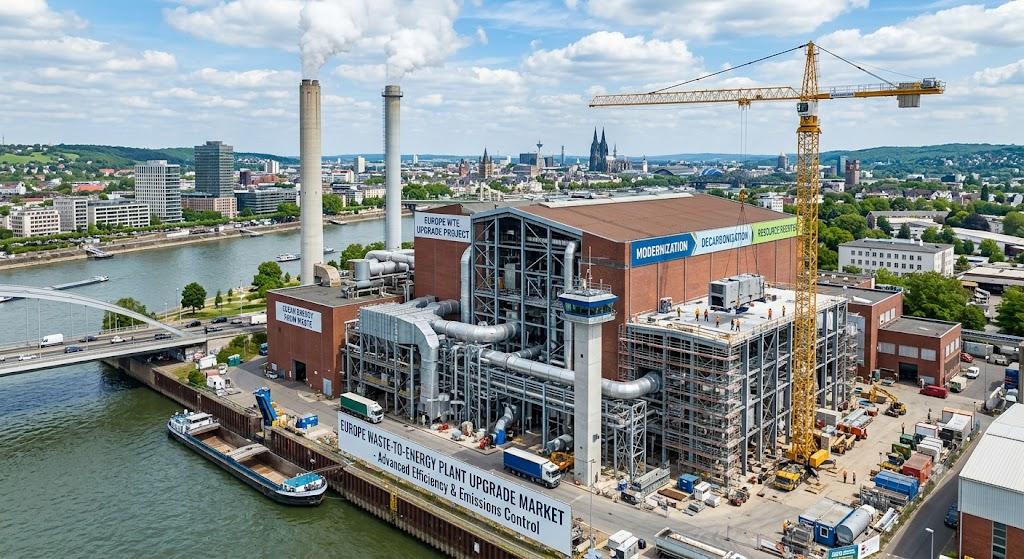
The modernization of waste-to-energy plants is becoming an increasingly important part of Europe's infrastructure strategy. Existing facilities must respond to changing waste policies, stricter environmental expectations, evolving energy markets, and growing demand for reliable operations. These pressures are encouraging operators to look beyond routine maintenance and consider comprehensive upgrades that improve performance across the entire plant.
Asset age is one of the clearest reasons for modernization. Equipment installed many years ago can become less efficient, harder to maintain, or difficult to integrate with current digital systems. Replacement of critical machinery can restore reliability, while upgrades to controls and instrumentation can improve visibility into plant conditions. A coordinated approach can deliver more value than isolated component replacement.
Waste composition is another major consideration. Greater recycling, reuse, and separate collection can alter the residual waste stream. Plants may receive material with different moisture content and energy characteristics than in previous decades. Modern feeding and combustion systems can provide greater flexibility, helping facilities maintain stable operation despite feedstock changes.
Energy recovery is central to the business case. Waste contains energy that can be converted into electricity and heat, but the amount recovered depends on plant efficiency and local infrastructure. Upgrading boilers, turbines, condensers, heat exchangers, and steam systems can improve energy utilization. Connecting facilities to district heating or industrial networks can further increase the value of recovered heat.
Environmental technology is equally important. Flue-gas cleaning, filtration, monitoring, and process control systems must operate reliably to support regulatory compliance. Modern equipment can offer improved control, better data quality, and more efficient use of treatment inputs. Upgrades can also make it easier to respond to changing operating conditions without compromising environmental performance.
Digital tools are becoming a defining feature of modernized facilities. Industrial sensors and connected platforms can collect information from combustion, energy recovery, emissions, electrical, and mechanical systems. Analytics can reveal relationships between operating conditions and performance. Predictive maintenance can use these insights to identify developing problems before they cause costly failures.
Automation can also improve operational consistency. Advanced control systems can adjust process parameters continuously rather than relying solely on manual intervention. Digital records can additionally support reporting, maintenance planning, and long-term performance analysis.
For stakeholders, Europe Waste-to-Energy Plant Upgrade Industry represents a diverse opportunity extending beyond traditional equipment sales. Engineering companies can support assessments and integration, technology providers can supply specialized systems, and service firms can provide maintenance and optimization. Companies able to combine several capabilities may have an advantage in complex modernization projects.
Capital planning remains essential because not every plant requires the same level of investment. Some facilities may benefit from targeted upgrades to specific bottlenecks, while others may need extensive refurbishment. Operators can prioritize projects based on asset condition, compliance requirements, expected energy gains, maintenance savings, and future operating needs.
Construction and commissioning risks should also be considered. Work inside an operating facility requires careful sequencing and coordination. Shutdown windows may be limited, and new systems must interface with existing infrastructure. Detailed engineering, testing, operator training, and contingency planning can help ensure that improvements deliver the expected benefits.
The broader significance of modernization is its ability to preserve useful infrastructure while preparing it for future requirements. Building new capacity may be necessary in some locations, but existing plants can often provide valuable services when upgraded appropriately. Modernization can extend asset life, improve energy recovery, strengthen environmental performance, and increase operational resilience.
As Europe's waste management landscape changes, the most successful facilities will likely be those capable of adapting rather than simply maintaining historical operating models. Strategic investment in equipment, automation, emissions treatment, and energy systems can help waste-to-energy plants remain productive parts of regional infrastructure.
The modernization journey is therefore not a single technology project. It is a continuing process of improving efficiency, reliability, environmental performance, and adaptability. For operators and market participants, the opportunity is to identify where investment creates measurable operational value. This helps.

 Arabic
 French
 Spanish
 Portuguese
 Deutsch
 Turkish
 Dutch
 Italiano
 Russian
 Romaian
 Portuguese (Brazil)
 Greek