
How to Play Badminton: A Beginner's Guide
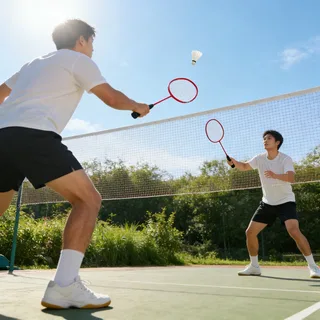
Learning how to play badminton looks simple from the sidelines, hit the shuttlecock over the net, keep it from touching the ground on your side. But once you actually step onto a court, the sport reveals a surprising amount of technique, strategy, and footwork that separates casual backyard rallies from genuine competitive play. This guide walks through the fundamentals of how to play badminton properly, along with practical tips for finding your nearest indoor badminton court once you're ready to move beyond casual practice.
Understanding the Basic Rules
Before learning how to play badminton well, it helps to understand the basic structure of the game. Matches are played either as singles, one player per side, or doubles, two players per side, on a rectangular court divided by a net. Players score points by successfully landing the shuttlecock within the opponent's side of the court, or when the opponent fails to return it properly. Matches typically consist of three games, with the first player or team to reach 21 points, winning by at least a two-point margin, taking each game.
The court itself has different boundary lines for singles and doubles play, which often confuses beginners at first, since doubles courts use wider side boundaries but shorter back boundaries compared to singles matches.
Getting the Grip Right
One of the most overlooked fundamentals when learning how to play badminton is proper racket grip. The most common grip, known as the forehand grip, involves holding the racket similar to shaking hands, with the base knuckle of the index finger resting on the racket's bevel edge. This grip allows for natural wrist movement, which generates much of the power and control in badminton shots rather than relying purely on arm strength.
Many beginners instinctively grip the racket too tightly, which restricts wrist flexibility and makes shots feel stiff and less accurate. Practicing a relaxed grip, tightening only at the moment of contact with the shuttlecock, tends to produce better results than maintaining constant tension throughout a rally.
Basic Shots Every Beginner Should Learn
Learning how to play badminton effectively starts with mastering a handful of fundamental shots. The clear sends the shuttlecock high and deep to the opponent's back court, useful for resetting a rally or buying time to recover position. The drop shot sends the shuttlecock just over the net with minimal force, landing close to the net on the opponent's side, effective for catching opponents out of position. The smash, badminton's most aggressive shot, drives the shuttlecock downward with significant power, typically used to end a rally when an opponent's return leaves the shuttlecock high and within reach.
Practicing these shots consistently, ideally on a proper indoor badminton court where wind doesn't interfere with shuttlecock flight, helps beginners develop the timing and technique needed to use them effectively during actual matches.
Footwork Matters More Than Most Beginners Expect
Good footwork often separates players who struggle to reach shots from those who move efficiently around the court. Badminton footwork relies on quick, small steps rather than large strides, allowing players to change direction rapidly as shots come from unpredictable angles. Returning to a central "ready position" after each shot, rather than staying wherever the previous shot left you, helps maintain court coverage throughout a rally.
This aspect of how to play badminton well takes considerable practice to develop naturally, and many beginners find that footwork drills, even without a racket, help build the muscle memory needed for efficient court movement during actual play.
Why Indoor Courts Make a Real Difference for Learning
Wind and inconsistent lighting can make learning basic shuttlecock control considerably harder for beginners, which is why finding your nearest indoor badminton court often accelerates the learning process compared to casual outdoor play. Indoor conditions offer predictable shuttlecock flight, allowing beginners to focus entirely on technique rather than constantly adjusting for environmental factors that even experienced players find frustrating.
Searching for your nearest indoor badminton court also typically connects you with facilities offering proper court markings, appropriate lighting, and often coaching support, all of which matter considerably more for beginners still learning fundamental technique than they might for casual recreational players.
Common Mistakes Beginners Make
Understanding common errors helps new players avoid developing bad habits early on. Standing too flat-footed, rather than staying light on the balls of your feet, slows reaction time considerably during fast exchanges. Overhitting shots, using excessive force when a controlled shot would work better, often leads to shots landing out of bounds rather than staying in play. Many beginners also neglect the backhand side of their game, favoring forehand shots even when a backhand return would be more efficient, which opponents quickly learn to exploit once they notice the pattern.
Working with an instructor or more experienced player, even informally, at your nearest indoor badminton court can help identify these habits early, before they become ingrained enough to require significant retraining later.
Building Consistency Through Regular Practice
Like most sports, improving at badminton comes down largely to consistent practice rather than occasional, sporadic sessions. Players learning how to play badminton properly benefit from regular access to a court, since technique and footwork both require repeated practice to become instinctive rather than something you have to consciously think through during fast-paced rallies.
This is another reason finding a reliable nearest indoor badminton court matters for anyone serious about improving, since consistent access to proper facilities removes one of the biggest barriers to regular practice that casual, weather-dependent outdoor play often creates.
Progressing Beyond the Basics
Once fundamental shots and footwork start feeling more natural, players typically progress toward understanding basic strategy, shot placement, deception, and reading an opponent's positioning to anticipate their next move. This stage of learning how to play badminton benefits significantly from playing against a range of opponents with different styles, something more consistently available at an established indoor badminton court with an active player community compared to occasional casual games with the same few people.
Final Thoughts
Learning how to play badminton well involves far more than simply hitting a shuttlecock back and forth, it requires understanding basic rules, developing proper grip and shot technique, and building the footwork needed to move efficiently around the court. Finding a reliable nearest indoor badminton court gives beginners the consistent, weather-independent environment needed to practice these fundamentals effectively, turning gradual improvement into steady, noticeable progress over time.

 Arabic
 French
 Spanish
 Portuguese
 Deutsch
 Turkish
 Dutch
Dutch
 Italiano
 Russian
 Romaian
 Portuguese (Brazil)
 Greek
Greek