
Preparing an iGaming Brand for the Next Wave of AI-Driven Casino Games
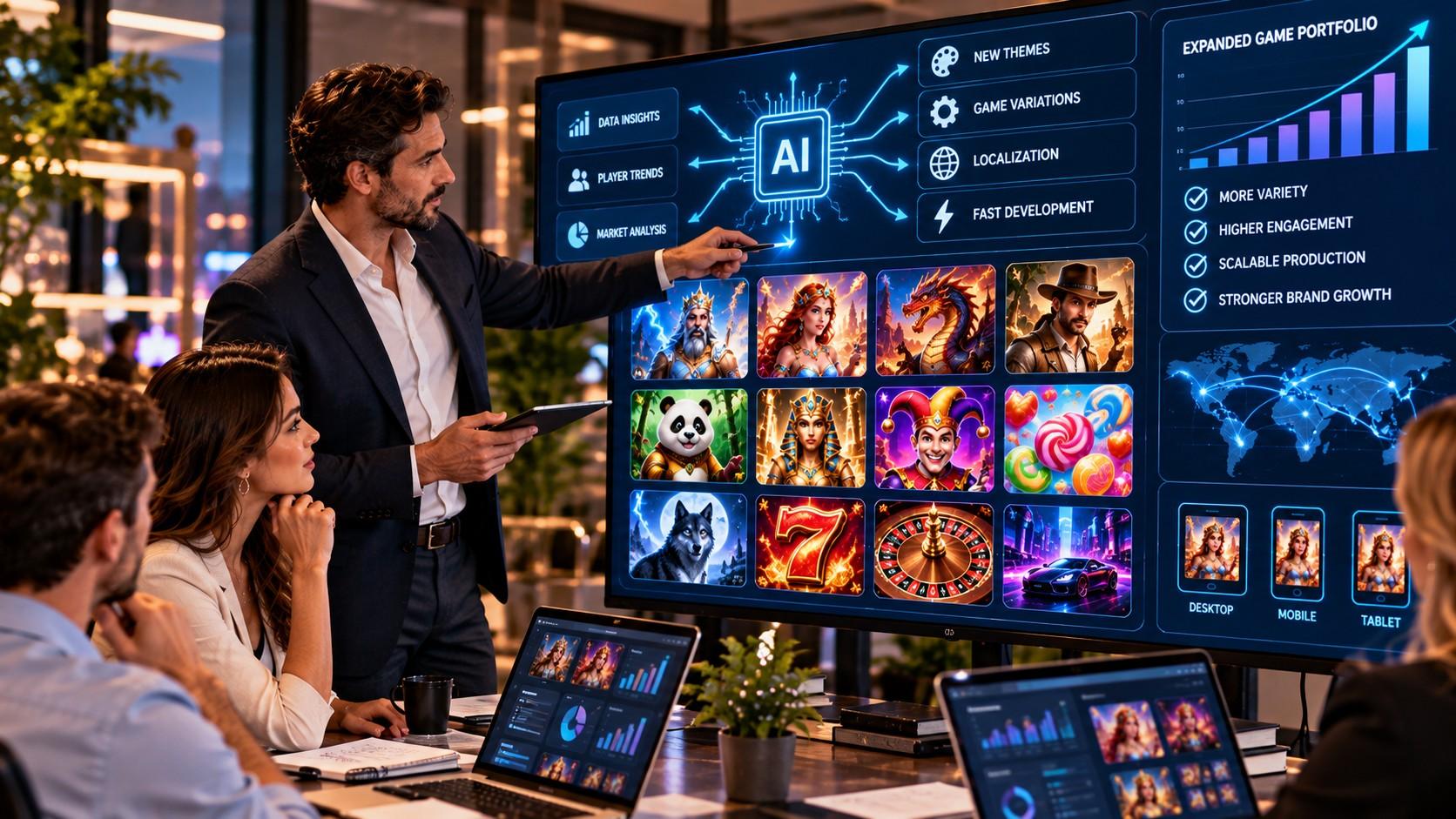
The way casino games are created is beginning to change. Instead of relying exclusively on fixed game catalogs and lengthy development cycles, operators can increasingly work with technologies that make customization faster and more flexible. This shift creates an opportunity to build broader game portfolios without sacrificing the visual identity that makes a casino brand recognizable.
For operators in the UAE, preparing for this transition requires more than simply adding AI-powered tools. The real challenge is creating the infrastructure, brand guidelines and internal processes needed to manage a growing collection of customized games.
AI can accelerate creative experimentation, but a successful portfolio still needs structure. Operators that establish that structure early will be better positioned to introduce new formats, refresh existing titles and respond to changing market demands.
Start With a Clear Game Portfolio Strategy
An expanding portfolio should not become a collection of unrelated experiments. Before introducing more AI-assisted games, operators should define the role that different formats will play within the casino.
Fast games such as Dice, Crash and Plinko can provide short, visually dynamic experiences. Slots can offer deeper thematic possibilities, while traditional formats such as Roulette can provide familiarity.
The objective is to determine how each category contributes to the overall player journey.
Build around different player preferences
Not every player interacts with casino games in the same way. Some prefer simple mechanics and quick decisions, while others are attracted to rich themes and extended features.
A broader portfolio can address these differences, but it should still feel connected through the operator's visual language. Consistent typography, colors, interface principles and animation styles can create this connection.
Establish Brand Rules Before Scaling
AI makes it easier to create visual alternatives, but unlimited creative freedom can create inconsistency. If every game uses a completely different style, the casino may lose its recognizable identity.
Operators should therefore establish a flexible brand system before scaling their AI-driven portfolio.
This can include rules for:
-
primary and secondary colors;
-
typography;
-
logo placement;
-
interface hierarchy;
-
animation intensity;
-
illustration style;
-
sound direction;
-
mobile presentation.
These guidelines do not need to make every game look identical. Instead, they should define the characteristics that make the portfolio feel like it belongs to one brand.
Use AI for Exploration, Not Just Production
One of the strongest benefits of AI is the ability to explore concepts quickly. A creative team can test several visual directions before selecting one for refinement.
For example, a new Dice game could be explored through minimalist, futuristic, luxury or adventure-inspired concepts. A Plinko title could take an entirely different visual direction while still sharing selected brand elements.
At www.beexar.com/, this philosophy is applied to branded casino game customization, with AI-assisted creation of graphics and visual assets alongside configurable game experiences.

Give creative teams more options
Traditional workflows can make experimentation expensive because each new direction requires substantial manual work. AI reduces some of that friction.
The advantage is not that every generated idea will be suitable. Most will require refinement or rejection. The value comes from being able to evaluate more possibilities before committing development resources.
For an operator in the UAE, this can support more localized and campaign-specific creative concepts without requiring every visual idea to become a completely separate development project.
Prepare the Technical Foundation
A larger game portfolio also creates technical responsibilities. Every new title needs to fit into the platform's existing architecture, wallet environment, player accounts and reporting systems.
A scalable approach should therefore be established before the portfolio becomes difficult to manage.
Beexar's current platform, for example, provides operator-specific game configurations and supports management of game parameters, layouts and visual design. Its documentation also describes versioning, previews and publishing workflows for game configurations.
This type of structure allows an operator to think about games as manageable products rather than isolated files or one-off integrations.
Separate the game from the brand layer
A useful approach is to distinguish between core game functionality and the visual identity applied to it. This makes it easier to update branding without rebuilding fundamental mechanics.
Such modularity can become increasingly important as the portfolio grows. A new campaign may require a different visual treatment, while the underlying game remains stable.
Plan for Multiple Game Versions
AI-driven customization can make it tempting to create endless variations. Operators should resist creating versions without a clear purpose.
Instead, versioning can be tied to specific objectives: a new market, seasonal campaign, brand refresh, promotional event or major product launch.
A controlled system makes it easier to identify which version is active and what has changed.
Beexar's game management environment includes version history and the ability to preview configurations before publication, providing a useful model for managing an evolving portfolio.
Keep experiments separate from live games
Creative experimentation should not automatically affect the live player experience. Draft configurations and preview environments allow teams to review changes before they become public.
This is particularly important when AI-generated visual assets are involved. Human review remains necessary to ensure that the final result follows brand standards and provides a clear user experience.
Think About Currencies From the Beginning
A larger portfolio may eventually need to support different monetary models. Operators should therefore avoid designing every game around a rigid currency assumption.
A scalable architecture can accommodate different fiat currencies and, where appropriate, other models. Beexar currently supports standard currencies and custom currency configurations, while its game launch process passes the player's currency as part of the session.
For operators in the UAE, this flexibility can become useful when planning expansion or developing different products for distinct markets.
Make Mobile Part of the Original Design
An AI-generated visual concept can look impressive on a large monitor but become difficult to use on a smartphone. Mobile presentation therefore needs to be considered from the beginning.
Game interfaces should preserve the most important information even when screen dimensions change. Controls, balances, results and interactive elements need sufficient space, while decorative components can be reduced when necessary.
Beexar's games are designed to scale to mobile viewport sizes, with documented approaches for embedding or launching games across desktop and mobile environments.
Test more than the artwork
Mobile testing should examine the complete interaction rather than simply checking whether the background fits the screen.
Operators should review buttons, numerical displays, animation performance, loading behavior and the overall visual hierarchy. This becomes more important as the portfolio includes games with different mechanics and interface requirements.
Create an Internal AI Review Process
As the number of AI-assisted games grows, operators need a repeatable approval process. Someone should be responsible for checking visual consistency, usability, technical readiness and brand compliance before a game reaches players.
A simple workflow might involve creative generation, internal selection, design refinement, technical testing, preview approval and publication.
This prevents speed from becoming disorder.
Build a Portfolio That Can Keep Evolving
The most valuable AI-driven portfolio is not necessarily the one with the largest number of titles. It is the one that can adapt without becoming difficult to control.
Operators in the UAE can prepare by combining flexible game technology with clear brand rules, modular design principles and disciplined publishing processes. AI can then handle a greater share of exploration and customization while human teams remain responsible for strategic decisions.
As this model develops, casino games can become more responsive to campaigns, markets and brand evolution. Instead of waiting through long development cycles for every new concept, operators can create a portfolio that grows in smaller, more purposeful steps while preserving the identity players recognize across the platform.

 Arabic
 French
 Spanish
 Portuguese
 Deutsch
 Turkish
 Dutch
 Italiano
 Russian
 Romaian
 Portuguese (Brazil)
 Greek