
Cavity Stability Focused by RuiDing Cap Mould Engineering
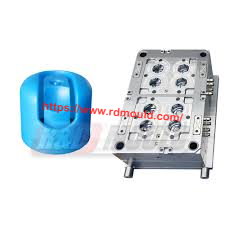
On a busy injection floor the first sign that tooling is working properly often appears in the sound of the press and the way parts drop free, and that quiet confidence frequently comes from a Cap Mould that fills evenly and releases without hesitation. When every cavity behaves the same way across hundreds of cycles, downstream sorting and assembly stay smoother. The advantage is rooted in the steels and surface treatments chosen for the cavities, the way the tool was matched to the specific closure and resin, the internal balance of filling and cooling, the practical reality of running and maintaining it day after day, and the overall construction that keeps the process stable.
Cavity and core surfaces take the full force of pressure and temperature change. The materials used here must hold their polish and dimensions through repeated heating and cooling while resisting the abrasive effect of the melt. Cooling channels need to stay efficient so that heat leaves the part at a controlled rate. Moving components such as ejectors and slides require surfaces that continue to move freely without wear or sticking. These choices stay invisible when they succeed, but any weakness quickly shows up as flash, short shots, or marks on the finished caps.
Selecting the right mould begins with the part itself rather than the machine. Thread form, sealing lip, and wall thickness dictate cavity layout and gate position. The number of cavities has to suit both the required output and the realistic capacity of the press. Venting must allow air to escape cleanly so that the melt can reach every detail. Cooling layout needs to match the resin's behavior so that parts solidify evenly and leave the mould without distortion. Short trial runs under actual production conditions usually reveal more than drawings alone.
Once the mould is running, the functional heart is the coordinated sequence of filling, packing, cooling, and ejection. Balanced runners keep each cavity receiving the same amount of material. Effective cooling removes heat fast enough to support stable cycle times without locking in stress. Ejection that acts evenly across the cavities prevents warping or surface damage. When these actions stay consistent the mould needs less frequent attention and the crew can concentrate on material quality and final inspection.
The people who live with the tool notice the small daily differences. A mould that opens and closes smoothly reduces the physical effort of monitoring the process. Surfaces that stay clean longer cut the time spent removing residue between shifts. Predictable fill patterns and release behavior make it easier to catch early changes before they turn into scrap. Over weeks and months the ability to keep the same cavity performance across different operators and shifts simplifies planning and keeps output steady.
Construction details support all of the above. A rigid mould base resists deflection under clamp force. Cooling and hydraulic connections are placed where they can be reached without excessive disassembly. Alignment features keep the two halves registering accurately through long runs. The external appearance is secondary, yet a clean and purposeful tool makes visual checks faster and contributes to an orderly production area.
Instead of following a fixed formula, Taizhou Huangyan Rui Ding Mould & Plastic Co., Ltd. focuses on the practical conditions found on real packaging lines, and the rdmould approach reflects that same priority.
Current tooling options and application details can be reviewed directly at https://www.rdmould.com/ for anyone evaluating Cap Mould solutions against the material and operational points discussed above.

 Arabic
 French
 Spanish
 Portuguese
 Deutsch
 Turkish
 Dutch
 Italiano
 Russian
 Romaian
 Portuguese (Brazil)
 Greek