
Peyronie’s Disease: Causes, Symptoms, Diagnosis, and Treatments
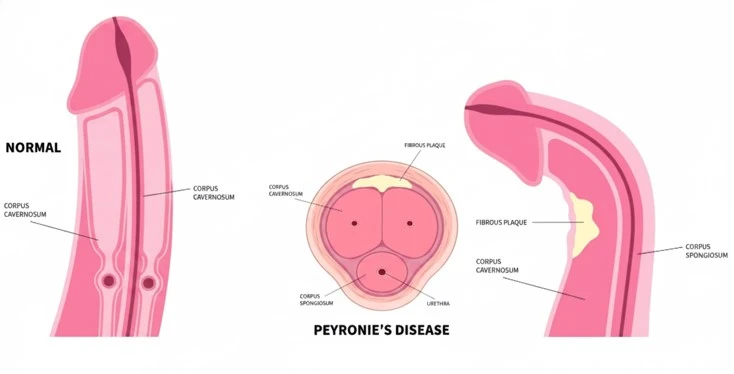
Peyronie’s Disease is a complex connective tissue disorder that affects the penis, leading to curvature, deformity, pain, and in some cases, erectile dysfunction. Despite being relatively common, it remains underdiagnosed due to social stigma and lack of awareness. For many men, the condition can significantly impact both physical intimacy and psychological well-being.
This in-depth article explores Peyronie’s disease from a clinical and practical perspective, covering everything from underlying causes to modern treatment advancements.
What Is Peyronie’s Disease?
Peyronie’s disease is characterized by the formation of fibrous scar tissue, known as plaques, within the tunica albuginea—the fibrous envelope surrounding the corpora cavernosa (erectile chambers of the penis).
In a normal erection, the tunica albuginea expands evenly, allowing the penis to become straight and rigid. However, when plaques develop, they restrict expansion in certain areas. This results in curvature, indentation, or even shortening of the penis.
The curvature can range from mild (less than 15 degrees) to severe (greater than 60 degrees), and in extreme cases, may prevent sexual intercourse entirely.
Epidemiology and Prevalence
Although historically considered rare, recent studies suggest that Peyronie’s disease affects approximately 6% to 10% of men. The prevalence increases with age, particularly in men over 50. However, younger men in their 20s and 30s are also increasingly being diagnosed.
Risk is higher in individuals with:
- Diabetes mellitus
- Erectile dysfunction
- Smoking habits
- Family history of fibrotic disorders
Causes and Pathophysiology
The exact mechanism of Peyronie’s disease involves a combination of trauma and abnormal wound healing.
Microtrauma and Inflammation
Repeated minor trauma during sexual activity or physical stress can damage the penile tissue. In most men, this heals normally. However, in Peyronie’s disease, the healing process becomes dysregulated.
Fibrosis Formation
Instead of normal tissue regeneration, excessive collagen deposition occurs. This leads to the formation of fibrotic plaques that are:
- Dense
- Non-elastic
- Poorly vascularized
Role of Oxidative Stress
Oxidative stress and inflammatory cytokines contribute to chronic tissue damage and fibrosis.
Genetic Factors
Certain genetic predispositions may increase susceptibility to abnormal collagen production.
Associated Disorders
Men with Peyronie’s disease often have related fibrotic conditions such as:
- Dupuytren’s contracture
- Ledderhose disease (plantar fibromatosis)
Clinical Symptoms
The presentation of Peyronie’s disease varies depending on severity and stage.
1. Penile Curvature
Curvature is the hallmark feature and may occur in different directions:
- Dorsal (upward) – most common
- Ventral (downward)
- Lateral (sideways)
2. Palpable Plaques
Patients may feel hardened areas or nodules along the shaft of the penis.
3. Pain
Pain is typically present during the early inflammatory phase and may occur:
- During erection
- Occasionally at rest
4. Erectile Dysfunction
This may result from:
- Reduced blood flow
- Psychological distress
- Structural deformity
5. Penile Deformities
Advanced cases may show:
- Hourglass deformity
- Indentations
- Hinging effect (unstable erection)
6. Penile Shortening
Loss of length is common due to fibrosis and reduced elasticity.
Disease Phases
Acute (Active) Phase
- Duration: 6–18 months
- Symptoms: pain, evolving curvature
- Ongoing inflammation
Chronic (Stable) Phase
- Pain subsides
- Curvature stabilizes
- Scar tissue becomes permanent
Treatment strategies differ significantly between these phases.
Diagnostic Evaluation
Medical History
A thorough history includes:
- Onset and progression of curvature
- Pain levels
- Erectile function
Physical Examination
Doctors assess:
- Plaque location
- Degree of curvature
Imaging
Penile ultrasound is the most commonly used imaging tool. It helps:
- Identify plaque size and calcification
- Evaluate blood flow
In some cases, intracavernosal injection is used to induce erection for accurate measurement.
Treatment Approaches
Treatment is individualized based on severity, symptoms, and patient goals.
Non-Surgical Management
1. Oral Medications
Although widely used, oral therapies have limited proven effectiveness. Examples include:
- Vitamin E
- Potassium para-aminobenzoate (POTABA)
2. Intralesional Injections
The most effective non-surgical therapy involves direct injection into plaques.
A leading FDA-approved option is:
- Collagenase Clostridium histolyticum
Mechanism:
- Breaks down collagen fibers
- Softens plaques
- Reduces curvature
Treatment Protocol:
- Multiple injection cycles
- Combined with penile modeling
3. Mechanical Therapies
Penile Traction Therapy (PTT)
This method uses a device to stretch the penis gradually.
Benefits include:
- Reduction in curvature
- Increased penile length
- Improved tissue elasticity
Vacuum Erection Devices (VED)
Primarily used for erectile dysfunction but may help improve blood flow and prevent tissue loss.
4. Shockwave Therapy
Low-intensity extracorporeal shockwave therapy (Li-ESWT) is used mainly for:
- Pain reduction
- Improved circulation
However, its effectiveness in correcting curvature is limited.
Surgical Management
Surgery is typically reserved for stable disease with severe deformity.
1. Tunica Albuginea Plication
- Shortens the convex side
- Straightens the penis
- Less invasive
- May reduce penile length
2. Plaque Incision or Excision with Grafting
- Plaque is cut or removed
- Graft material restores structure
- Suitable for complex deformities
3. Penile Prosthesis Implantation
For men with significant erectile dysfunction:
- Penile implant surgery
Benefits:
- Restores erectile function
- Corrects curvature
- High satisfaction rates
Psychological and Emotional Impact
Peyronie’s disease can deeply affect mental health.
Common Issues:
- Depression
- Anxiety
- Sexual performance stress
- Relationship difficulties
Management:
- Psychological counseling
- Couples therapy
- Support groups
Addressing emotional health is as important as physical treatment.
Lifestyle and Preventive Measures
Although Peyronie’s disease cannot always be prevented, certain measures may reduce risk:
Avoid Trauma
- Practice safe sexual techniques
- Use lubrication
Manage Chronic Conditions
- Diabetes control
- Blood pressure management
Quit Smoking
Smoking contributes to poor blood circulation and delayed healing.
Maintain Healthy Diet
Antioxidant-rich foods may help reduce inflammation.
Complications
If left untreated, Peyronie’s disease can lead to:
- Severe penile deformity
- Complete erectile dysfunction
- Psychological distress
Prognosis
The natural course varies:
- Some cases stabilize without intervention
- Others progressively worsen
With proper treatment:
- Curvature can be significantly reduced
- Sexual function can be restored
- Quality of life improves
Emerging Treatments and Research
Modern research is focusing on innovative therapies such as:
Stem Cell Therapy
Aims to regenerate damaged tissue.
Platelet-Rich Plasma (PRP)
Uses growth factors to enhance healing.
Gene Therapy
Targets abnormal collagen production at the molecular level.
Although promising, these treatments are still under investigation.
When to Seek Medical Help
Consult a specialist if you experience:
- Noticeable penile curvature
- Persistent pain
- Difficulty with erections
Early intervention leads to better outcomes and prevents complications.
Final Conclusion
Peyronie’s Disease is a medically significant yet treatable condition that affects both physical and emotional health. While it may initially seem alarming, advancements in medical science have made it possible to manage and even correct the condition effectively.
From non-invasive therapies like injections and traction devices to advanced surgical solutions, patients now have a wide range of options tailored to their needs.
The key lies in early diagnosis, informed decision-making, and seeking care from qualified medical professionals. With the right approach, most men can regain confidence, functionality, and a satisfying quality of life.

 English
 Arabic
 French
 Spanish
 Portuguese
 Deutsch
 Turkish
 Dutch
Dutch
 Italiano
 Russian
 Romaian
 Portuguese (Brazil)