
How Artificial Intelligence Is Transforming the Telecom Electronic Manufacturing Services Market
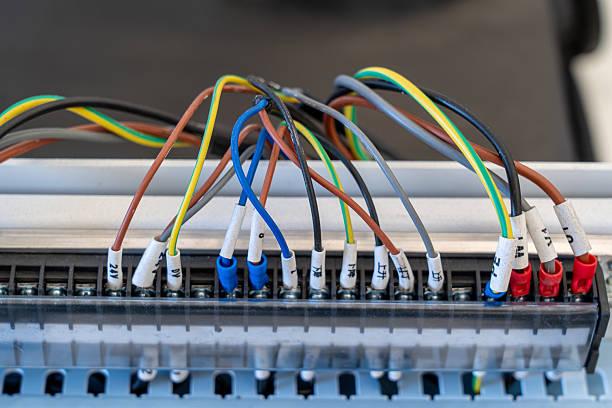
How Artificial Intelligence Is Transforming the Telecom Electronic Manufacturing Services Market
Author: Ekta Chaurasia, Team Lead – ICT, Semiconductor & Electronics Research, M2Square Consultancy
Artificial Intelligence (AI) is rapidly becoming one of the most influential technologies shaping the future of global manufacturing. Within the telecommunications industry, AI is not only enhancing network performance and customer experiences but also transforming how telecom equipment is designed, manufactured, tested, and delivered.
As telecom operators accelerate investments in 5G networks, edge computing, Open RAN infrastructure, and next-generation connectivity solutions, manufacturers face increasing pressure to improve efficiency, reduce costs, and maintain exceptional quality standards.
These challenges are driving widespread adoption of AI-powered manufacturing solutions across the Telecom Electronic Manufacturing Services Market, helping companies modernize operations while supporting the growing demand for advanced telecommunications equipment.
According to industry analysis, the global Telecom Electronic Manufacturing Services Market is valued at USD 239.34 billion in 2026 and is projected to reach USD 406.65 billion by 2034, growing at a CAGR of 6.9% during the forecast period.
Telecom EMS Market Snapshot
| Metric | Value |
|---|---|
| Market Size (2026) | USD 239.34 Billion |
| Forecast Value (2034) | USD 406.65 Billion |
| CAGR | 6.9% |
| Key Technology Driver | Artificial Intelligence |
| Leading Region | Asia-Pacific |
| Major Opportunity | Smart Manufacturing |
Why AI Matters in Telecom Manufacturing
Modern telecom equipment has become significantly more complex than previous generations.
Manufacturers must produce:
- 5G base stations
- Massive MIMO antennas
- Optical networking systems
- Communication processors
- Edge computing hardware
- Open RAN infrastructure
These products require precision manufacturing, strict quality standards, and highly efficient supply chains.
Artificial Intelligence enables manufacturers to manage this complexity more effectively.
AI-Powered Quality Control Improves Product Reliability
One of the most impactful applications of AI is automated quality inspection.
Traditional inspection methods often depend on manual processes, which can be time-consuming and susceptible to human error.
AI-powered vision systems can:
- Detect microscopic defects
- Analyze manufacturing consistency
- Improve inspection accuracy
- Reduce product failures
- Accelerate production cycles
For telecom equipment manufacturers, this translates into higher reliability and lower operational costs.
Predictive Maintenance Reduces Downtime
Manufacturing disruptions can significantly impact production schedules and profitability.
AI-powered predictive maintenance systems analyze equipment performance data to identify potential failures before they occur.
Benefits include:
- Reduced unplanned downtime
- Lower maintenance costs
- Improved equipment utilization
- Extended machinery lifespan
- Higher operational efficiency
As telecom manufacturing facilities become increasingly automated, predictive maintenance is becoming a critical operational tool.
Analyst Perspective
"Artificial Intelligence is fundamentally changing the economics of telecom electronics manufacturing. From predictive maintenance and quality assurance to intelligent supply chain management, AI is enabling manufacturers to achieve higher efficiency, lower costs, and greater operational resilience."
— Ekta Chaurasia, Team Lead, M2Square Consultancy
Smart Factories Are Becoming the New Industry Standard
AI is a foundational component of Industry 4.0 and smart manufacturing initiatives.
Modern smart factories leverage AI alongside:
- Industrial IoT sensors
- Robotics
- Cloud computing
- Digital twins
- Advanced analytics
Together, these technologies create highly connected manufacturing environments capable of real-time decision-making and continuous optimization.
Key Benefits of Smart Factories
- Improved productivity
- Enhanced product quality
- Faster production cycles
- Better resource utilization
- Increased operational visibility
These advantages are driving widespread adoption across telecom manufacturing facilities worldwide.
AI Enhances Supply Chain Management
Telecom equipment manufacturing relies on complex global supply chains.
Products often contain components sourced from multiple countries and suppliers.
AI helps optimize supply chain operations through:
Demand Forecasting
Machine learning algorithms analyze historical trends and market signals to improve forecasting accuracy.
Inventory Optimization
AI systems help maintain optimal inventory levels while reducing excess stock.
Risk Identification
Predictive analytics can identify potential supply disruptions before they impact production.
Logistics Optimization
AI improves route planning, transportation efficiency, and delivery scheduling.
These capabilities are becoming increasingly valuable as manufacturers seek greater supply chain resilience.
AI Accelerates Product Development
Telecom technologies evolve rapidly.
Manufacturers must bring new products to market faster than ever before.
AI supports product development by:
- Optimizing design processes
- Accelerating simulations
- Improving prototype testing
- Enhancing engineering decision-making
This allows telecom OEMs and EMS providers to shorten development cycles and respond more quickly to market demands.
AI Supports 5G Infrastructure Expansion
The rollout of 5G networks continues creating substantial manufacturing demand.
AI helps manufacturers scale production of:
- Radio access network equipment
- Base stations
- Fiber-optic networking systems
- Communication modules
- Edge computing devices
By improving efficiency and production planning, AI enables manufacturers to support large-scale infrastructure deployments more effectively.
Regional Adoption Trends
Asia-Pacific Leads AI Manufacturing Adoption
Asia-Pacific remains the largest telecom electronics manufacturing region.
Key factors driving AI adoption include:
- Strong manufacturing infrastructure
- Government support for digital transformation
- Expanding telecom investments
- Competitive manufacturing environments
China, South Korea, Taiwan, India, and Japan are actively investing in AI-powered manufacturing technologies.
North America
North American manufacturers are focusing on advanced automation, smart factories, and AI-driven operational efficiency.
Europe
European companies emphasize AI integration alongside sustainability and energy-efficient manufacturing practices.
Challenges to AI Adoption
Despite its benefits, implementing AI within manufacturing environments presents challenges.
These include:
- High implementation costs
- Workforce training requirements
- Data management complexity
- Cybersecurity concerns
- Integration with legacy systems
Organizations that successfully overcome these challenges are expected to gain significant competitive advantages.
Future AI Opportunities Through 2034
Emerging AI applications include:
Autonomous Manufacturing
Fully automated production environments capable of self-optimization.
Intelligent Robotics
Collaborative robots that adapt to changing production requirements.
Advanced Digital Twins
Highly detailed virtual models for production planning and process optimization.
AI-Driven Sustainability
Reducing energy consumption and environmental impact through intelligent resource management.
These innovations are expected to further transform telecom electronics manufacturing over the next decade.
Future Outlook
As telecommunications technologies become increasingly sophisticated, AI will continue playing a central role in manufacturing transformation.
Key growth areas include:
- Smart factories
- Open RAN hardware production
- Edge computing equipment
- Private wireless network infrastructure
- Industrial IoT communications
- Future 6G technologies
Manufacturers investing in AI today are positioning themselves to capture future market opportunities.
Conclusion
Artificial Intelligence is redefining how telecom equipment is manufactured, tested, and delivered. By improving quality control, predictive maintenance, supply chain management, and production efficiency, AI is helping manufacturers meet the demands of an increasingly connected world.
With the Telecom Electronic Manufacturing Services Market projected to reach USD 406.65 billion by 2034, AI-driven innovation will remain one of the industry's most important growth catalysts.
Explore the Full Market Report
Telecom Electronic Manufacturing Services Market Report
Telecom Electronic Manufacturing Services Market Report
Related Industry Reports
HD Maps for Autonomous Driving Market
HD Maps for Autonomous Driving Market Report
Remote Sensing Services Market
Remote Sensing Services Market Report
Track and Trace Solutions Market
Track and Trace Solutions Market Report
Frequently Asked Questions
How is AI transforming telecom electronics manufacturing?
AI improves quality control, predictive maintenance, supply chain management, and production efficiency.
Why is AI important in the Telecom EMS Market?
AI helps manufacturers manage increasing product complexity while reducing costs and improving operational performance.
What are the benefits of AI-powered quality inspection?
AI inspection systems improve defect detection, product reliability, and manufacturing consistency.
How does AI support supply chain management?
AI enables demand forecasting, inventory optimization, logistics planning, and disruption risk management.
What future AI applications are expected in telecom manufacturing?
Autonomous manufacturing, intelligent robotics, digital twins, and AI-driven sustainability solutions are expected to shape future industry growth.

 English
 Arabic
 French
 Portuguese
 Deutsch
 Turkish
 Dutch
Dutch
 Italiano
 Russian
 Romaian
 Portuguese (Brazil)
 Greek
Greek