1. What Is Fatty Liver Disease?
Fatty liver disease occurs when excess fat accumulates inside liver cells. While a small amount of fat is normal, too much can interfere with liver function and eventually cause inflammation or damage.
There are two primary forms:
- Non-Alcoholic Fatty Liver Disease (NAFLD)
- Alcohol-Related Fatty Liver Disease
Today, non-alcoholic fatty liver disease is one of the most common liver conditions due to rising obesity, diabetes, and sedentary lifestyles.
2. Understanding the Liver's Role
Before understanding stomach pain, it's important to know what the liver does.
The liver helps:
- Process nutrients
- Produce bile for digestion
- Remove toxins
- Store energy
- Support immunity
- Regulate metabolism
When fat begins accumulating in liver cells, these important functions may become disrupted.
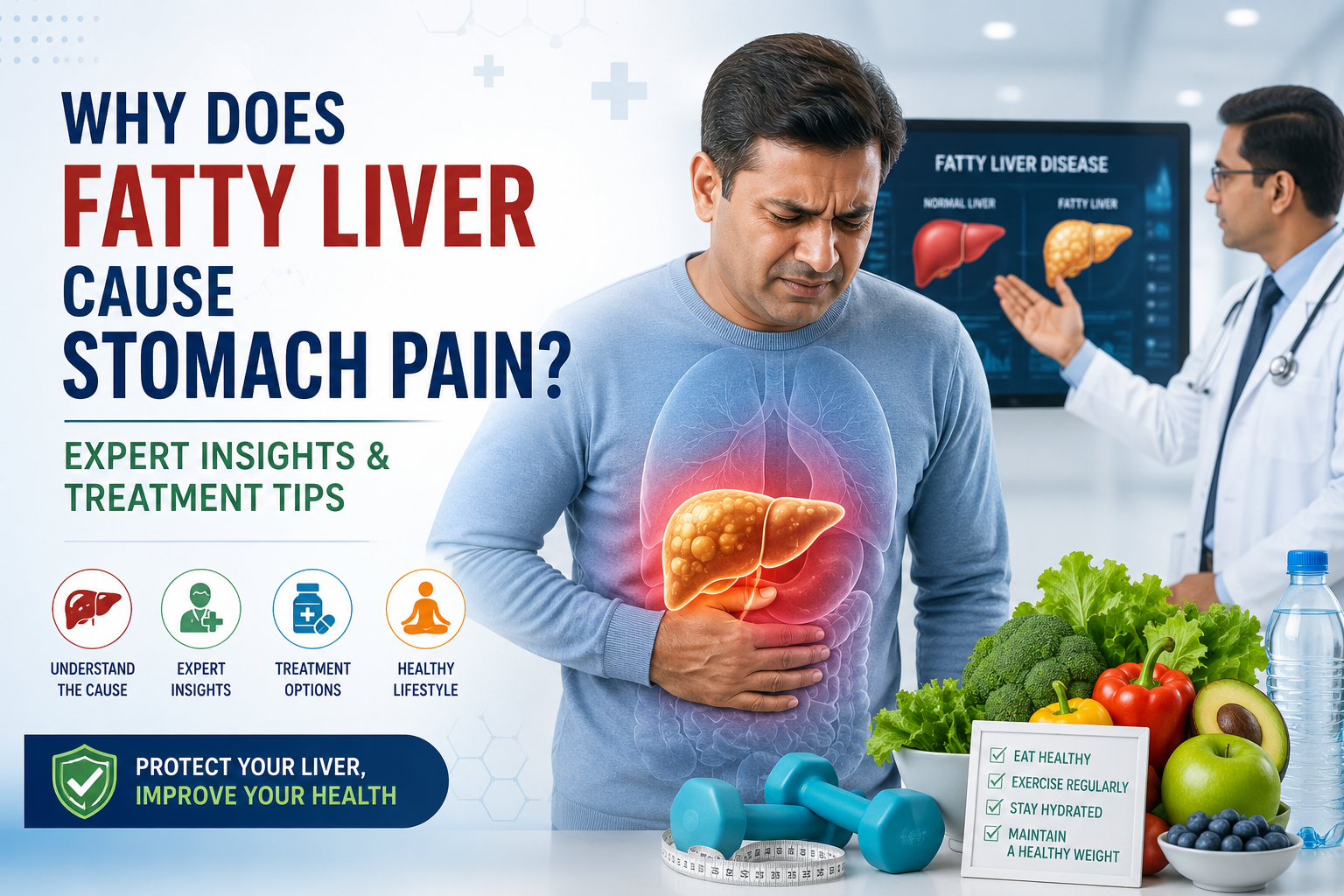
3. Why Does Fatty Liver Cause Stomach Pain?
This is one of the most frequently asked questions among patients.
Liver Enlargement
As fat accumulates, the liver may enlarge. The liver itself has very few pain receptors, but its outer covering, called the liver capsule, can stretch.
This stretching creates discomfort or pain.
Inflammation
In some people, fatty liver progresses to inflammation. This condition is called steatohepatitis.
Inflammation increases pressure inside the liver and surrounding tissues, leading to abdominal discomfort.
Digestive Disturbances
The liver plays a major role in digestion. When liver function becomes impaired, digestive issues such as bloating, indigestion, and stomach discomfort can occur.
Associated Conditions
Many people with fatty liver also experience:
- Obesity
- Acid reflux
- Gallbladder issues
- Irritable bowel syndrome
These conditions can contribute to stomach pain.
4. Types of Fatty Liver Disease
Simple Fatty Liver
Fat accumulates without significant inflammation or liver damage.
Non-Alcoholic Steatohepatitis (NASH)
This is a more serious form involving inflammation and liver cell injury.
Alcoholic Fatty Liver Disease
Excessive alcohol consumption causes fat accumulation.
Advanced Liver Disease
Untreated fatty liver can progress to:
- Fibrosis
- Cirrhosis
- Liver failure
5. Common Symptoms Beyond Stomach Pain
Many people have fatty liver without symptoms. However, some may experience:
- Fatigue
- Weakness
- Loss of appetite
- Nausea
- Abdominal fullness
- Bloating
- Unexplained weight changes
- Difficulty concentrating
As the condition worsens, symptoms may become more noticeable.
6. Where Is Fatty Liver Pain Usually Felt?
The discomfort is usually located in the:
Upper Right Abdomen
The liver sits beneath the rib cage on the right side. Pain often appears here as:
- Dull aching
- Feeling of fullness
- Pressure sensation
Middle Upper Abdomen
Some people experience discomfort in the central upper abdomen.
Radiating Pain
Occasionally, discomfort may spread toward the back or right shoulder.
The pain is typically mild to moderate rather than severe.
7. Risk Factors for Fatty Liver Disease
Several factors increase the risk.
Obesity
Excess body fat significantly increases liver fat accumulation.
Type 2 Diabetes
Poor blood sugar control contributes to fatty liver development.
High Cholesterol
Elevated cholesterol and triglyceride levels can worsen liver health.
Sedentary Lifestyle
Lack of physical activity slows metabolism.
Poor Diet
Frequent consumption of:
- Sugary drinks
- Processed foods
- Fast food
- Refined carbohydrates
raises the risk.
Genetics
Family history may influence susceptibility.
8. How Doctors Diagnose Fatty Liver
Medical History
Your doctor will review symptoms and risk factors.
Physical Examination
Liver enlargement may sometimes be detected.
Blood Tests
Tests evaluate liver enzymes and overall liver function.
Ultrasound
An ultrasound is often the first imaging test used.
FibroScan
This advanced test measures liver stiffness and fat content.
Liver Biopsy
In complex cases, a biopsy may be required to assess damage.
9. Treatment Options for Fatty Liver
There is no single magic pill for fatty liver. Treatment focuses on addressing the underlying cause.
Weight Management
Even a 5–10% reduction in body weight can significantly improve liver health.
Managing Diabetes
Good blood sugar control helps reduce liver fat.
Cholesterol Control
Proper management of cholesterol levels supports liver recovery.
Medication Review
Certain medications may need adjustment under medical supervision.
10. Lifestyle Changes That Help
Exercise Regularly
Aim for at least:
- 150 minutes of moderate exercise weekly
Activities may include:
- Walking
- Cycling
- Swimming
- Jogging
Sleep Better
Poor sleep can worsen metabolic disorders.
Reduce Stress
Chronic stress contributes to unhealthy eating patterns and inflammation.
Stay Hydrated
Proper hydration supports overall metabolic health.
11. Foods to Eat and Avoid
Foods That Support Liver Health
Vegetables
- Spinach
- Broccoli
- Kale
- Carrots
Fruits
Whole Grains
Healthy Fats
- Nuts
- Seeds
- Olive oil
- Avocados
Lean Proteins
- Fish
- Chicken
- Lentils
- Beans
Foods to Avoid
Sugary Foods
- Cakes
- Pastries
- Soft drinks
Processed Foods
Excessive Alcohol
Alcohol can accelerate liver damage.
High-Fat Fast Foods
Frequent consumption increases liver fat accumulation.
12. When Fatty Liver Becomes Serious
Ignoring fatty liver can be dangerous.
Fibrosis
Scar tissue begins replacing healthy liver tissue.
Cirrhosis
Advanced scarring affects liver function.
Liver Failure
The liver loses its ability to perform essential tasks.
Liver Cancer
Long-term liver damage increases cancer risk.
This is why early diagnosis and treatment are crucial.
13. Can Fatty Liver Be Reversed?
The encouraging news is that fatty liver is often reversible, especially in its early stages.
Weight Loss Works
Studies consistently show that gradual weight reduction can reduce liver fat.
Exercise Helps
Physical activity improves insulin sensitivity and metabolism.
Healthy Eating Matters
Dietary improvements can significantly reduce inflammation and liver fat accumulation.
Medical Monitoring Is Important
Regular follow-ups help track progress and prevent complications.
14. When to See a Liver Specialist
You should seek medical attention if you experience:
- Persistent stomach pain
- Yellowing of the eyes or skin
- Severe fatigue
- Swelling in the abdomen
- Unexplained weight loss
- Abnormal liver test results
Consulting a liver specialist early can help prevent long-term complications.
If advanced liver disease develops, guidance from the best liver transplant surgeon in india and an experienced hepatology team may become necessary to evaluate treatment options and preserve liver function.
15. Final Thoughts
Fatty liver disease is often called a "silent disease" because many people have it without realizing it. However, stomach pain can sometimes serve as an early warning sign that something isn't right.
The pain usually occurs because an enlarged or inflamed liver stretches surrounding tissues, creating discomfort in the upper abdomen. While this pain is often mild, it should never be ignored, especially when accompanied by fatigue, bloating, or abnormal liver tests.
The good news is that fatty liver is frequently reversible through healthy lifestyle changes, proper nutrition, regular exercise, and medical guidance. Taking action today can protect your liver and improve your overall health for years to come.
FAQs
1. Can fatty liver directly cause stomach pain?
Yes. Fat accumulation can enlarge the liver and stretch its outer capsule, causing discomfort or pain, usually in the upper right abdomen.
2. Is stomach pain from fatty liver constant?
Not always. Some people experience occasional discomfort, while others may notice pain after eating heavy meals or during periods of inflammation.
3. How can I reduce fatty liver pain naturally?
Weight loss, regular exercise, a healthy diet, avoiding alcohol, and controlling diabetes can help reduce symptoms and improve liver health.
4. Can fatty liver lead to liver failure?
Yes. If left untreated, fatty liver can progress to fibrosis, cirrhosis, and eventually liver failure in some individuals.
5. When should I consult the best liver transplant surgeon in india?
You should consult a specialist if fatty liver progresses to advanced liver disease, cirrhosis, liver failure, or if your doctor recommends evaluation for complex liver conditions or transplantation.


 Arabic
 French
 Spanish
 Portuguese
 Deutsch
 Turkish
 Dutch
Dutch
 Italiano
 Russian
 Romaian
 Portuguese (Brazil)
 Greek
Greek