
Automaticmachinefactory Welding Machine: Pipeline versus Shop Fabrication
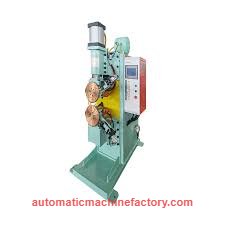
How do Welding Machine for pipeline construction differ in design from those used in general fabrication? This question shapes procurement decisions for infrastructure projects and manufacturing facilities alike. Pipeline welding occurs outdoors, across variable terrains, under weather extremes, and often in remote locations. General fabrication takes place within controlled workshops, with stable power supplies, environmental protection, and material handling systems. These contrasting operational environments impose fundamentally different design requirements on the welding equipment. A machine engineered for one setting frequently underperforms in the other. Manufacturers like those represented through automaticmachinefactory, operating under the TARUN brand, produce Welding Machine lines that address these distinct application needs through specific engineering choices. Understanding these differences ensures appropriate equipment selection and prevents costly performance mismatches.
The first significant design divergence involves power source characteristics and portability. Pipeline construction stretches across hundreds of kilometers, with welding crews moving continuously along the right-of-way. Equipment must be transportable, often via trucks, helicopters, or sidebooms. Machines intended for this service feature compact footprints, integrated lifting points, and ruggedized enclosures that withstand transportation vibration and impacts. Engine-driven welders, combining a diesel or gasoline engine with a generator and welding rectifier, predominate in this sector because they operate independently of grid power. General fabrication machines typically assume a fixed location with unlimited grid power availability. These units utilize transformer-rectifier designs that weigh substantially more, require three-phase power connections, and offer no inherent mobility. The automaticmachinefactory product range acknowledges this distinction by offering power source configurations tailored to each application's mobility requirements.
Environmental protection ratings diverge sharply between the two categories. Pipeline welding equipment operates in rain, snow, dust, and temperature extremes ranging from desert heat to arctic cold. The machine's enclosures must achieve minimum IP54 ingress protection against dust and water spray, with critical components sealed against moisture ingress. Internal electronics receive conformal coating to resist condensation and corrosion. Cooling systems must function efficiently across wide ambient temperature ranges, with cold-start provisions for low-temperature operation. General fabrication machines operate within climate-controlled workshops, enabling simpler IP23 or IP20 ratings. These machines use forced-air cooling through open louvers, which would permit dust and moisture entry in outdoor settings. The TARUN welding equipment line incorporates these environmental considerations, with pipeline-specific models featuring reinforced enclosures and sealed control panels.
Duty cycle ratings and thermal management strategies also separate these designs. Pipeline welding often involves continuous, multi-pass welding on thick-wall pipe, requiring extended arc-on time. The machine must deliver rated output continuously without thermal overload shutdowns. This necessitates higher duty cycle ratings, typically 100% duty cycle at the maximum current used for root and hot passes. Fabrication welding, by contrast, involves intermittent welding with frequent fit-up and part handling interruptions. A 60% duty cycle at rated current usually suffices for shop operations. Achieving continuous duty in pipeline machines requires larger transformers, heavier gauge windings, and more substantial cooling systems—often liquid-cooled designs. These thermal management components add weight and cost but prove essential for pipeline productivity. Manufacturers like those in the automaticmachinefactory network design their pipeline-specific units with oversized thermal capacity to support sustained welding operations.
Output control and arc characteristics receive different optimization priorities. Pipeline welding demands consistent arc characteristics across long electrode extensions and varying workpiece positions. The machine must maintain stable output despite generator speed fluctuations from engine loading changes. Advanced pipeline welders incorporate closed-loop feedback systems that monitor arc voltage and current continuously, adjusting rectifier firing angles to maintain preset parameters. These systems enable pipeline crews to achieve reproducible weld properties across thousands of joints. Fabrication machines often prioritize flexibility over absolute stability, offering multiple process selections and adjustable slope control. While these features provide shop versatility, they introduce complexity that pipeline welders prefer to avoid. TARUN's equipment line offers dedicated process control panels for pipeline work, featuring simplified interface and robust parameter memory for repeatable settings.
The feeder and cable assemblies differ notably between applications. Pipeline welding requires long cable runs—often 30 to 50 meters—to reach around pipe diameters and along trench lines. Voltage drop over these distances demands higher open-circuit voltages and thicker, more flexible cable constructions. The wire feeder must deliver consistent wire feed speed against varying cable resistance. General fabrication typically uses shorter cable runs, reducing voltage drop concerns and allowing lighter cable constructions. The physical design of pipeline feeder systems emphasizes ruggedness, featuring enclosed wire spindles, four-roll drive systems, and impact-resistant housings. Shop feeders prioritize ease of spool changes and visible wire path inspection.
Remote control and monitoring capabilities reflect different operational contexts. Pipeline welding increasingly uses remote controls mounted on the welding stinger or handle, allowing the welder to adjust amperage without returning to the machine. These systems use digital communication protocols resistant to electrical noise from the welding arc. Some pipeline setups incorporate data logging to track welding parameters for quality assurance and regulatory compliance. Fabrication controls typically reside on the machine faceplate or adjacent pendant station, with less need for remote adjustment. The TARUN machines designed for pipeline use include compatible remote control interfaces and optional data recording modules.
Power input flexibility represents another distinguishing factor. Pipeline machines often feature multiple voltage input configurations, allowing connection to different site generators or grid supplies encountered across regions. This global compatibility requires autoranging power supplies and user-selectable input taps. Fabrication machines can be fixed for a single, known supply voltage, simplifying internal wiring and reducing cost. The TARUN welding equipment range includes models with these field-adjustable input provisions, supporting international pipeline projects where power availability varies.
Maintenance access and serviceability features also diverge. Pipeline equipment must allow rapid field repairs using basic hand tools, with modular components that can be swapped without specialized test equipment. The machine's layout prioritizes access to consumables and common failure points. Fabrication machines assume workshop-based maintenance with full diagnostic equipment available. https://www.automaticmachinefactory.com/product/automation-machinery-division/welding-machine/ illustrates the range of welding solutions available, from portable engine-drive units to sophisticated shop systems. Selecting the correct equipment for pipeline or fabrication work depends on a thorough assessment of operating conditions, duty cycles, power availability, and mobility requirements. Each application's unique constraints necessitate corresponding design features. Does your equipment procurement process systematically evaluate these operational distinctions to avoid costly mismatches?

 English
 French
 Spanish
 Portuguese
 Deutsch
 Turkish
 Dutch
Dutch
 Italiano
 Russian
 Romaian
 Portuguese (Brazil)
 Greek
Greek