
RuiDing SMC Mould: Designing for Fenders or Small Housings
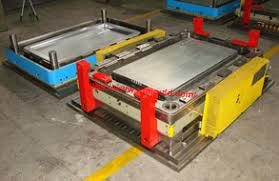
What specific design features make an SMC Mould suitable for producing large automotive parts like hoods or fenders versus small electrical enclosures? This question fundamentally separates tooling engineers' priorities when approaching different product categories. The physical scale difference—a hood spanning over a meter versus an enclosure fitting in a palm—creates cascading design implications. Material flow behavior changes across distances, thermal management requirements shift dramatically, and structural demands vary with part function. These factors influence every aspect of mould construction, from steel selection to ejection systems. Manufacturers like RuiDing, operating through rdmould, apply distinct engineering philosophies to each product type, recognizing that a tool optimized for one application frequently underperforms in the other. Understanding these scale-driven design distinctions proves essential for procurement teams and product engineers seeking appropriate tooling solutions.
The first major design divergence involves the mould base and clamping system. Large automotive panels require substantial mould bases, often exceeding 3 meters in length and weighing several tons. These massive structures incorporate heavy guide pillars, robust parting line locks, and multiple support pillars to prevent deflection under clamping pressure. The mould's weight necessitates crane handling points, fork-lift channels, and reinforced mounting slots for the press platens. Small electrical enclosures, conversely, utilize compact mould bases that fit standard machining centers. Their lightweight construction permits manual handling and rapid changeover between presses. The rdmould engineering team selects mould base dimensions based on projected part area, expected clamp tonnage, and available press capacity, ensuring structural integrity without unnecessary material cost.
Cavity and core construction strategies differentiate significantly with part size. Large automotive panels require multi-piece cavity construction to manage steel availability and machining complexity. These cavities incorporate welded or bolted inserts for areas requiring different steel grades—for example, high-polish steel for Class A surfaces and wear-resistant steel for shut-off regions. The cavity surface receives extensive chrome plating to ensure release and scratch resistance across thousands of cycles. Small enclosures frequently utilize solid, single-piece cavity blocks machined from uniform steel grades. Their smaller size allows simpler construction, with less concern about thermal expansion mismatch between assembled components. RuiDing applies these construction principles based on the specific SMC Mould application, balancing manufacturing practicality with performance requirements.
Heating system design represents another critical differentiation point. Large automotive panels demand zoned heating systems with multiple independent temperature control circuits. These circuits maintain uniform cavity temperature across the extensive surface area, preventing uneven curing that causes warpage or surface defects. Thermocouple sensors positioned throughout the cavity feed temperature data to closed-loop controllers, adjusting heating power to individual zones. The heating channels follow complex paths to reach all cavity regions, often requiring deep-hole drilling or brazed tube construction. Small enclosures utilize simpler, single-zone heating with straight drilled channels. Temperature uniformity requirements prove less stringent because the smaller surface area allows natural heat conduction to balance minor variations. The SMC Mould heating strategy directly influences cycle time and part quality, with automotive applications demanding sophisticated thermal management.
Gating and material flow systems require thorough adaptation to part dimensions. Large automotive panels employ multiple gates, often utilizing edge or fan gates positioned along the part perimeter. The runner system must distribute SMC compound evenly across the wide cavity, preventing flow fronts from meeting and creating knit lines. Some large moulds incorporate injection-compression sequences where the press closes partially, material injects, and then full clamp pressure compresses the charge. This technique reduces fiber orientation and improves surface quality. Small enclosures use simpler single-point gating, often direct pin-point or submarine gates. Material flow distances remain short, reducing pressure requirements and simplifying flow analysis. RuiDing's engineering team performs extensive flow simulation for each SMC Mould design, optimizing gate locations and runner dimensions for the specific part geometry.
Ejection systems scale proportionally with part area and complexity. Large automotive panels require multiple ejector pins distributed across the cavity surface to prevent part distortion during demolding. These pins activate through hydraulic or pneumatic systems, synchronized to operate in sequence for delicate parts. The ejection stroke must clear deep draw areas and undercuts, sometimes requiring lifter mechanisms for internal features. Small enclosures utilize fewer ejector pins, often arranged around the perimeter or near thick sections. Their ejection systems operate mechanically through the press's ejector bar, with simpler timing requirements. The SMC Mould design from RuiDing incorporates ejector placement strategies that minimize witness marks on visible surfaces while ensuring reliable part removal.
Surface finish requirements impose different cavity preparation procedures. Automotive panels demand Class A surface finishes suitable for direct painting without prior priming. This requires microscopic-level cavity polishing, followed by chrome or nickel plating, and final diamond buffing. Any defect in the cavity surface transfers visibly to the molded part, necessitating flaw-free finishing. Small electrical enclosures typically require cosmetic surfaces but accept textured or matte finishes that hide minor imperfections. Their cavity preparation focuses on achieving functional release rather than optical perfection. The rdmould finishing team applies different polishing protocols based on the specified surface class, recognizing that automotive applications demand exceptional cavity surface quality.
Steel selection and heat treatment vary between part size categories. Large automotive moulds utilize pre-hardened mould steels like P20 or 718H for the cavity blocks, providing adequate wear resistance with good machinability. Critical areas, such as shut-off surfaces and gate inserts, receive localized hardening or specialized steel inserts. The mould base uses structural steel grades that provide dimensional stability under clamping loads. Small enclosure moulds often specify harder steel grades like S136 or NAK80, offering enhanced wear resistance for longer production runs without polishing. These steels undergo thorough heat treatment and tempering to achieve specified hardness while maintaining toughness. The RuiDing material selection process balances steel cost, machinability, and expected production volume for each SMC Mould project.
Cooling system complexity increases with part size and thermal mass. Large automotive panels require conformal cooling channels that follow the part contour, maintaining consistent temperature across the cavity. These channels, often produced through brazed construction or additive manufacturing, enhance cooling efficiency and reduce cycle time. The cooling circuit includes multiple independent zones to address varying wall thicknesses and flow path lengths. Small enclosures utilize straight drilled cooling lines, arranged parallel or perpendicular to the cavity. Their simpler cooling demands allow efficient heat removal through conventional channel patterns. The cooling system design directly impacts cycle time and dimensional stability, with RuiDing's engineering team optimizing channel placement for each mould's thermal requirements.
The shut-off and parting line design accommodates part geometry complexity. Large automotive panels often feature gentle contours and gradual curvature, allowing simple horizontal shut-offs. The parting line follows the part's peripheral edge, requiring precise matching surfaces to prevent flash. Small electrical enclosures frequently incorporate vertical shut-offs, side cores, and angled splits to accommodate complex internal features. These geometries demand sliding mechanisms, including cam pins and heel blocks, that increase mould complexity. The SMC Mould manufacturer must balance these functional requirements with manufacturing practicality, selecting appropriate construction methods for each application. https://www.rdmould.com/news/industry-news/smc-mould-is-a-versatile-and-strong-material.html explores the material's adaptability across these diverse applications. Ultimately, the specific design features embedded in an SMC Mould reflect the part's intended scale, function, and production environment. Recognizing these distinctions enables informed sourcing decisions and realistic performance expectations. Does your current mould specification adequately address the scale-specific requirements of your particular application?

 Arabic
 French
 Spanish
 Portuguese
 Deutsch
 Turkish
 Dutch
Dutch
 Italiano
 Russian
 Romaian
 Portuguese (Brazil)
 Greek
Greek