
Which Product Details Matter at carbidebursfactory for Buyers?
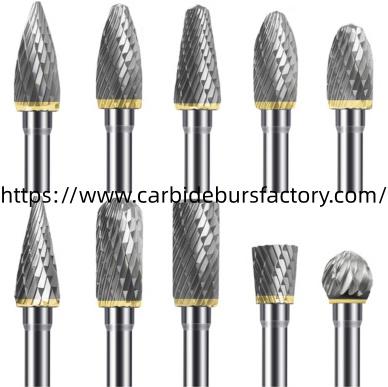
Carbide Rotary Tool selection requires buyers to consider several practical factors before placing an order. Workshops, industrial distributors, and metal fabrication businesses should examine workpiece materials, head shapes, cutting patterns, shank dimensions, and machine compatibility. Evaluating these details helps purchasing teams identify suitable accessories for different processing tasks while managing product specifications and inventory requirements.
Identify the Workpiece Materials
The materials being processed should be considered before selecting any cutting accessory. Steel, stainless steel, cast iron, aluminum, and copper have different machining characteristics, which means they may require different cutting configurations.
For example, hard metal applications may involve specific requirements for cutting edge strength and wear resistance. Softer materials may require flute designs that support chip removal and help reduce material buildup.
Buyers should explain their common applications when requesting product recommendations. Information about workpiece materials, processing methods, and expected surface conditions allows manufacturers to suggest suitable product configurations.
For distributors, understanding these differences also helps organize product categories and prepare a selection that addresses different customer requirements.
Choose a Suitable Head Shape
Head geometry affects how a cutting accessory reaches different working areas. Selecting the appropriate shape can make it easier to process flat surfaces, curved sections, corners, and narrow spaces.
Common options include:
Cylindrical heads for flat surfaces and general material removal.
Ball-shaped heads for curved areas and internal contours.
Oval heads for rounded surfaces and profile adjustment.
Tree-shaped heads for corners and detailed shaping.
Conical heads for angled surfaces and edge treatment.
Each configuration has different application characteristics. Buyers should consider the shape of their workpieces and the available operating space before selecting a product.
When purchasing multiple models, requesting a dimensional catalog can help compare head diameters, working lengths, and available configurations. This information is particularly useful for distributors preparing product assortments.
Compare Cutting Patterns and Flute Designs
Cutting patterns influence chip formation and material removal. Single-cut and double-cut designs have different flute arrangements and are intended for different working conditions.
Single-cut products are commonly used for applications involving directional cutting and material removal. Double-cut designs feature intersecting flute patterns that can help produce smaller chips and support controlled processing.
Some products are also developed for aluminum and other non-ferrous materials. Buyers should consider the workpiece composition and processing requirements rather than selecting a configuration based only on appearance.
Before placing an order, ask the manufacturer about available flute designs, recommended applications, and product differences. This can help purchasing teams match individual models with their intended uses.
Verify Shank Size and Machine Compatibility
A cutting accessory must fit the machine holder correctly. Even when the head shape and dimensions are suitable, an incompatible shank can prevent proper installation.
Buyers should check shank diameter, overall length, and compatibility with the collet or chuck used by their equipment.
Common measurements include 3 mm, 6 mm, 1/8 inch, and 1/4 inch. Metric and imperial dimensions should be checked carefully because similar-looking measurements are not necessarily identical.
Operating speed is another important consideration. Buyers should follow the manufacturer's specifications for permitted speeds and check that the selected product is appropriate for their equipment.
Providing machine details when requesting a quotation can help reduce specification misunderstandings and improve purchasing accuracy.
Examine Product Construction and Inspection Details
Product construction can influence working stability, wear behavior, and service life. Buyers should ask about the materials used for the cutting head and shank, as well as the manufacturing specifications applied to each model.
Important details include head dimensions, shank straightness, cutting edge condition, flute symmetry, and connection quality.
A supplier should be able to explain its inspection arrangements and identify which product dimensions are checked before shipment.
Sample testing is also useful. Buyers can evaluate selected models using their own equipment and workpiece materials to check compatibility under actual operating conditions.
For repeat purchases, recording agreed specifications can help maintain consistency between different batches and provide a reference for future orders.
Review Customization and Inventory Options
Different businesses have different purchasing requirements. Some distributors prefer standard models in several dimensions, while specialized workshops may need particular configurations for individual projects.
Buyers should ask whether customized head diameters, working lengths, shank sizes, and product combinations are available.
Minimum order quantities should also be confirmed. Different configurations may require different production arrangements, so checking quantity requirements before ordering helps purchasing teams prepare budgets.
Packaging deserves attention as well. Individual boxes, product labels, logo placement, and outer carton specifications can influence storage and distribution. Businesses selling products under their own brands should confirm artwork and packaging details before production begins.
Evaluate the Complete Purchasing Process
Product prices are only one part of a purchasing decision. Buyers should also compare sample costs, minimum quantities, packaging, production schedules, and shipping arrangements.
For overseas orders, it is useful to confirm export documentation, transportation responsibilities, payment terms, and estimated delivery periods.
Clear communication is important when handling technical questions or changing order specifications. Written confirmation of product dimensions, quantities, and packaging requirements helps both parties coordinate the purchasing process.For workshops, wholesalers, and industrial distributors looking for practical cutting accessories, carbidebursfactory provides product options for different machining applications. Buyers can visit https://www.carbidebursfactory.com/product/ to review available models, compare specifications, and contact the company about customized dimensions, product combinations, and purchasing arrangements.

 Arabic
 French
 Spanish
 Portuguese
 Deutsch
 Turkish
 Dutch
 Italiano
 Russian
 Romaian
 Portuguese (Brazil)
 Greek