
How Food-Container-Mold and HuaShun Redefine a Thin Wall Food Container Mould with Intelligent Gate Design
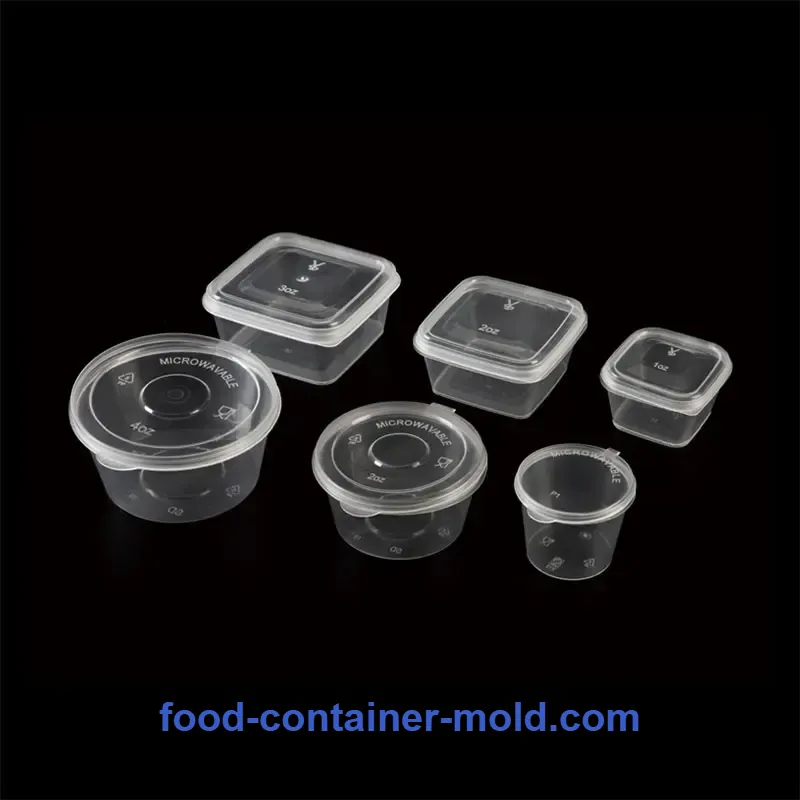
A thin wall food container must hold hot soup, resist cracking, and stack neatly. All three requirements trace back to one hidden feature: the gate. This small opening where molten plastic enters the cavity controls everything from fill speed to final strength. A poorly designed gate creates weak spots, flow marks, and dimensional errors. A precision gate produces uniform walls and clean edges. This reality forces a critical question: how does gate design affect the quality of products from Thin Wall Food Container Mould? Food-container-mold, from Yongkang Huashun Mould Co., Ltd., provides answers rooted in fifteen years of gate engineering experience.
The gate's location changes how plastic fills the cavity. A center gate sends material radiating outward equally. This placement works for round containers but creates weld lines in square or rectangular parts where flow fronts meet. An edge gate fills from one side, pushing air ahead of the melt. That air must escape through vents. If vents cannot release air fast enough, trapped gas burns the plastic or creates voids. HuaShun's engineers model gate placement using simulation software before cutting any steel. They test five to ten gate positions digitally, selecting the one that yields the lowest fill pressure and the most uniform temperature distribution.
Gate size controls shear rate. Molten plastic flowing through a small gate experiences high shear. High shear heats the material, potentially degrading additives or colorants. A gate too large reduces shear but extends cycle time because the gate seals later. The sweet spot for thin wall food containers exists where wall thickness measures point four to point seven millimeters. At this range, gate thickness typically runs at seventy to eighty percent of wall thickness. HuaShun calculates gate dimensions for each specific polypropylene grade because flow properties vary significantly between homopolymer, random copolymer, and impact copolymer.
Fan gates distribute melt across wide parts uniformly. This design prevents jetting, where plastic shoots straight into the cavity like a water hose, folding onto itself and creating surface defects. A fan gate spreads the flow, reducing orientation stresses. Containers produced with fan gates exhibit balanced shrinkage, resulting in round rims and flat bottoms. Direct pinpoint gates work for multiple cavities but require careful balancing. Each cavity must receive the same flow rate. Imbalance causes some cavities to pack while others still fill, producing overfilled and underfilled containers in the same shot.
Gate geometry affects post-molding performance. A gate with sharp corners creates stress concentrations. Those stresses make containers crack along gate lines during flexing. A rounded gate entrance blends smoothly into the part, distributing stress across a wider area. HuaShun's thin wall food container moulds use radiused gate transitions. This detail adds seconds to CNC programming but eliminates field failures. A container that cracks at the gate does not protect food and damages brand reputation.
Submarine gates cut themselves off during ejection, eliminating secondary trimming. This design improves consistency because no operator manually cuts gates. Consistency matters in thin wall containers because uneven gates create rough spots that irritate lips during drinking. Submarine gates require precise angle calculation. Too shallow, and the gate fails to shear cleanly. Too steep, and the gate leaves a protruding stub. HuaShun's toolmakers set submarine gates between thirty and forty-five degrees, depending on material stiffness.
Hot runner systems paired with valve gates provide active flow control. Each nozzle opens and closes independently. A valve gate near a thin section opens later, preventing overpacking. A valve gate near a thick section opens earlier, ensuring complete fill. This technology reduces warp by managing pressure distribution. However, valve gates increase mould cost. HuaShun advises customers based on annual volume projections. Low-volume projects use cold runners with optimized standard gates. High-volume projects receive hot runner systems with sequenced valve gates, paying back the investment through faster cycles and fewer rejects.
Gate witness marks affect container appearance. Retail food containers sell partly on visual appeal. A conspicuous gate scar on a clear lid looks unprofessional. HuaShun positions gates on non-critical surfaces or designs hidden gate locations. For round containers, the gate sits under the rim flange, invisible from any angle. For rectangular containers, the gate hides in a corner radius. These placement decisions require coordination between product designers and mould makers. Early involvement of the mould engineer yields better aesthetics without compromising fill quality.
Simulation software reveals flow patterns invisible to the naked eye. HuaShun uses Moldflow analysis for every thin wall food container mould. The software shows fill time, weld line positions, air trap locations, and required clamp tonnage. Gate design changes in the simulation update live. An engineer drags a gate two millimeters left and watches the effect on fill balance. This iterative process produces an optimized gate in hours instead of weeks of trial and error on a physical mould. Customers receive simulation reports before steel cutting begins, approving gate placement with confidence.
Real-world testing confirms simulation predictions. HuaShun produces trial shots from each new mould. The first samples reveal any gate-related defects: splay marks from shear heating, weak welds, or incomplete fills. Adjustments proceed in small increments. Enlarging a gate by point one millimeter changes flow characteristics noticeably. Reducing land length by point two millimeters alters pressure drop. The technical team documents each change, building a knowledge database for future designs. This continuous learning cycle improves every subsequent thin wall food container mould.
For customers evaluating mould suppliers, gate design questions separate experts from generalists. Ask about gate type, placement reasoning, and simulation validation. Request witness mark locations on drawings. Discuss hot runner options for high-volume jobs. A supplier who answers these questions confidently understands thin wall fundamentals. To see how HuaShun applies gate design principles to a round food container mould project, visit https://www.food-container-mold.com/news/industry-news/the-application-of-thin-wall-food-container-mould.html and review the case study. Then examine your own containers for gate marks. Quality starts at that invisible entry point.

 English
 Arabic
 French
 Spanish
 Portuguese
 Deutsch
 Turkish
 Italiano
 Russian
 Romaian
 Portuguese (Brazil)
 Greek
Greek